
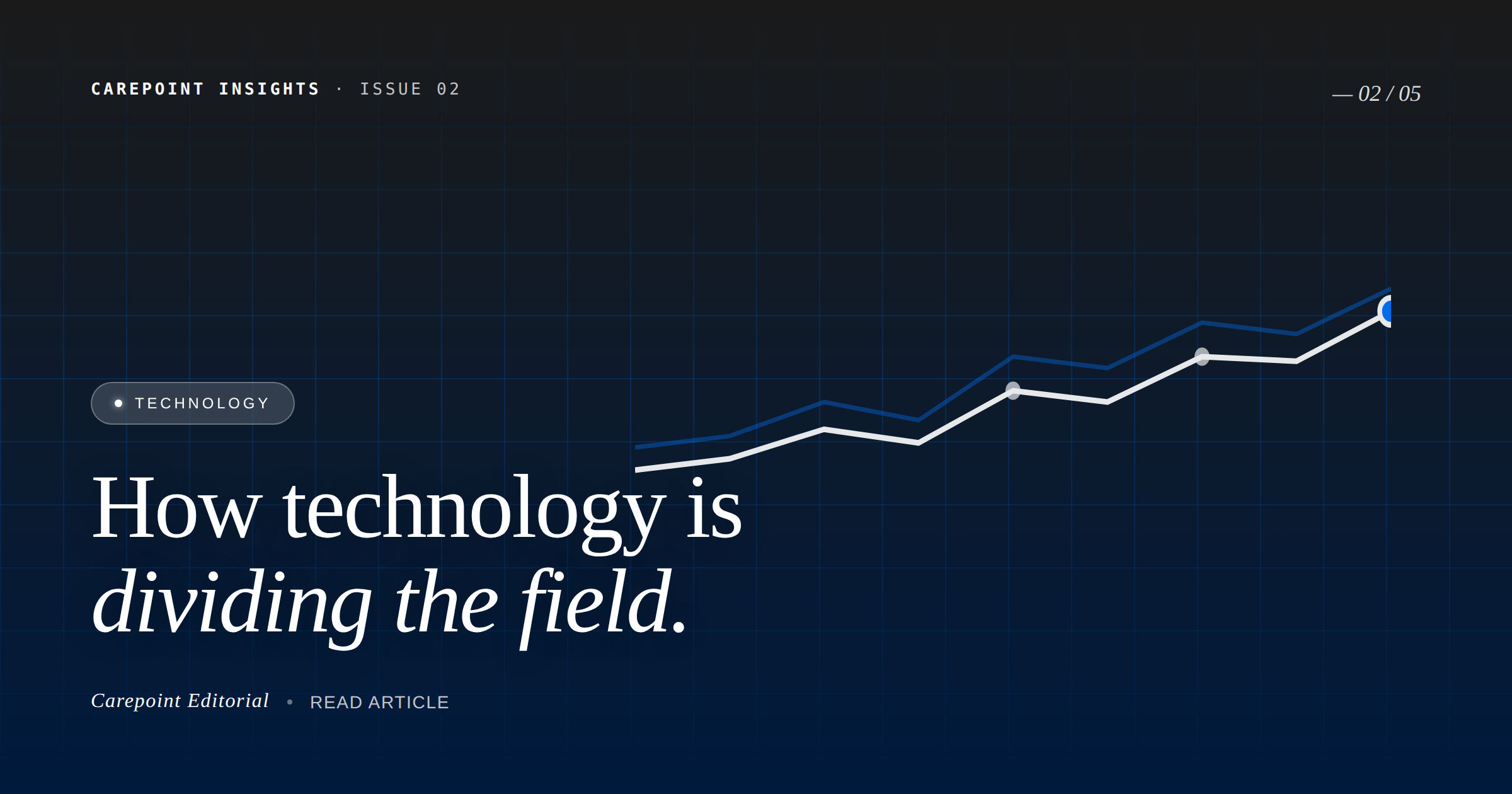
Technology Is No Longer Optional
Technology-enabled distribution used to be a differentiator in the insurance industry, giving agencies and agents a competitive edge when the market was less complex and operational expectations were lower.
Today, that has changed.
Technology is no longer simply an advantage; it has become the baseline for how modern agencies operate, how agents compete, and how distribution organizations scale effectively in an environment defined by rising costs, increasing complexity, and stronger performance expectations.
Across the insurance landscape, agencies are being forced to rethink how they manage operations, support agents, control costs, and maintain visibility across their business. According to LIMRA, 65% of intermediaries report rising distribution costs, and a growing majority are actively turning to technology as a way to offset those pressures and protect margins.
At the same time, the independent distribution channel, where FMOs and agency platforms operate, continues to dominate across key product lines, driving more than 90% of Indexed Universal Life premium and representing a majority of fixed and variable product distribution.
This shift is not accidental. It is being driven by platforms and organizations that provide real operational infrastructure, not just access to carriers, contracts, or products.
The Divide Is Already Happening
The market is already separating into two groups: organizations operating with technology and organizations still operating without it.
The gap between them is widening quickly, because agencies with connected systems are able to move faster, support agents more effectively, reduce administrative friction, and make better decisions with greater visibility across their operations.
Research from McKinsey & Company highlights the next phase of this evolution, where AI-powered copilots are beginning to enable agents with real-time, step-by-step guidance, tailored recommendations based on each client’s unique situation, and faster, more accurate decision-making at scale.
Supporting data from Vertafore reinforces the same trend, showing that organizations that embed technology directly into their daily workflows are pulling decisively ahead of those that treat technology as an add-on rather than a core part of their operating model.
This is not incremental improvement.
It is a structural advantage.
What Technology-Enabled Distribution Actually Looks Like
Technology-enabled distribution is not about adding more tools for agents and agencies to manage.
It is about creating connected infrastructure that brings the most important parts of the business into one streamlined operational environment.
At Carepoint, this takes shape through the Carepoint Connect platform, which is designed to centralize and simplify the operational flow of an agency while giving both agencies and agents better visibility into the work that drives production.
Carepoint Connect brings together key capabilities such as real-time Ready-to-Sell status monitoring, NIPR licensing integration, compliance visibility, policy lifecycle tracking, disenrollment monitoring, member eligibility verification before enrollment, provider network visibility before plan selection, and Sunfire single sign-on for quoting, enrolling, and managing policies.
This is what modern distribution looks like.
It is not a collection of disconnected systems, manual checks, spreadsheets, and separate platforms. It is one connected environment designed to help agencies operate with more speed, structure, and confidence.
The Research Is Clear
Technology investment is no longer a strategic option for agencies that want to grow.
It is a performance driver.
According to LIMRA, agencies that invest in technology are better positioned to reduce distribution costs, increase agent productivity, and improve retention among top-performing producers.
The outcome is consistent across the market: stronger enrollment performance, better retention, greater operational efficiency, and higher long-term revenue potential.
Carepoint Connect is built around this reality and provided as standard infrastructure to every agency partner, allowing agencies to access the benefits of a modern technology platform without having to build that infrastructure internally.
What This Means for Agents
For agents, the impact of technology is immediate because the average agent operating without connected systems spends hours every week on tasks that do not directly create growth.
Compliance checks, contracting status verification, licensing reviews, eligibility lookups, provider searches, and plan comparison workflows all take time away from client conversations and new business opportunities.
These activities are necessary, but they are not the highest-value use of an agent’s time.
Carepoint Connect removes much of that friction by automating and centralizing critical workflows, allowing agents to spend more time with clients, move faster in the field, and focus more energy on writing new business.
In today’s market, time is leverage, and the agents who can move with more speed, accuracy, and confidence have a clear advantage.
What This Means for Agencies
For agencies, the pressure is no longer only about growth.
It is also about efficiency.
As distribution costs rise and the market becomes more demanding, agencies must find ways to operate at scale without increasing overhead at the same pace.
Technology is what makes that possible.
With Carepoint Connect, agencies gain platform-level visibility across their operation, scalable support for every agent on their roster, and reduced administrative burden across the workflows that usually slow teams down.
Most importantly, agencies gain access to this infrastructure without the cost, complexity, or time required to build it internally.
That matters because the agencies best positioned for the future will not be the ones that simply recruit more agents or add more carriers. They will be the ones that can support their business with systems designed for scale.
The Foundation of Modern Distribution
Technology is no longer a competitive edge.
It is the foundation of modern distribution.
The agencies and agents who adopt it will be able to move faster, operate smarter, support clients more effectively, and capture more opportunity as the market continues to evolve.
Those who do not will feel the gap quickly, because the market is no longer waiting for agencies to catch up.
It is already moving.
More Carepoint Insights
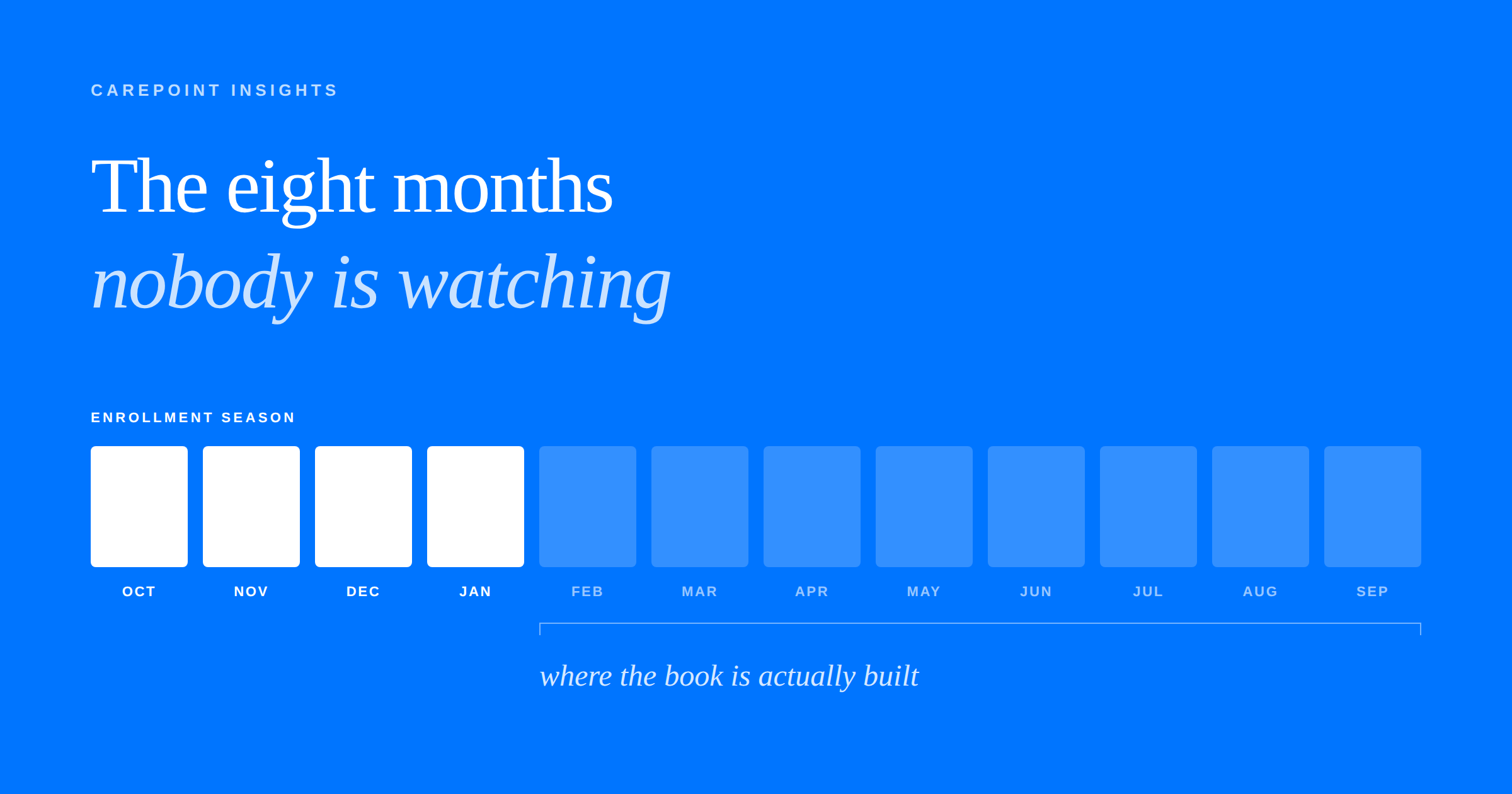
A new client book in the Carepoint portal gives agents one place to track every client relationship, and gives agencies a live view of production pacing.
A Market Under Real PressureThe Medicare Advantage landscape is not just changing.
A new client book in the Carepoint portal gives agents one place to track every client relationship, and gives agencies a live view of production pacing.
A Market Under Real PressureThe Medicare Advantage landscape is not just changing.

The Medicare brokerage landscape is entering a new phase.

The Medicare Advantage market is entering one of the most significant periods of disruption in its history.
Technology-enabled distribution used to be a differentiator. Today, it’s the baseline. Across the insurance landscape, rising costs and increasing complexity...

Carrier marketing dollars are tightening. Not gradually — structurally. Co-op funding — long relied on by agencies to...
Ready to grow with structure?
Whether you're building your book or scaling an agency, Carepoint gives you the tools, access, and support to move forward with confidence.

See how it works
A closer look at our ecosystem, and what makes Carepoint different.
Explore the platform
Speak to our team
Have questions? We’ll walk you through everything and help you decide if it’s the right fit.
Connect with us


Carepoint is an independent organization and is not affiliated with or endorsed by the United States government or the federal Medicare program. We do not represent all plans available in your area. The information provided is limited to the plans we offer. For additional plan options, please visit Medicare.gov or call 1-800-MEDICARE.
© 2026 Carepoint. All rights reserved. By using this website, you agree to our Terms of Service and Privacy Policy & Notices at Collection.
